Recognition & data
Improve how childhood dementia is recognized and classified across health systems and national data.
Home / Our Impact
Three interconnected pillars, all required to change the trajectory of childhood dementia: research, family care, and policy and advocacy.
This is not a single-family campaign. It’s a coalition to advance family support, research, and advocacy for all children facing childhood dementia, not a single family’s cause.
The Foundation’s governing covenant, “We do not take from children; we only give,” governs every decision it makes, in research, in policy, and in how it raises and spends every dollar.
A flagship BPAN program at Stanford Medicine, with implications for Parkinson’s and Alzheimer’s.
Explore →Support for families now, through the NBIA Disorders Association partnership and the UF clinical program.
Explore →Making childhood dementia visible to decision-makers, and impossible to ignore.
Explore →
Our largest investment is a comprehensive translational research program for BPAN at the Stanford School of Medicine, led by pediatric neurologist Dr. . It’s a first-of-its-kind effort to uncover BPAN’s disease signatures and screen thousands of drugs, including many already FDA-approved, for the ability to correct the deficits seen in BPAN.
See the research progress → Go deeper on the science →
Learn more: our story at the Lucile Packard Foundation for Children’s Health →
The $4.3M initial goal funds the research faculty plus the first two pathways; a $2.4M future goal adds Pathway 3, about $6.7M for the full program. The infrastructure is in place; philanthropy sets the pace.
While research advances, families live the daily realities. So we partner with the people who have supported these families for decades.
BPAN is one of the NBIA disorders. For nearly three decades, the NBIA Disorders Association, led by its president, Amber Denton, has provided education, community, and advocacy to these families. The Isa Elaine Foundation has given $60,000 in support of the Association and the families it serves: an initial $50,000 partnership gift, plus a recent $10,000 gift sponsoring a table at the NBIA family conference.
Family support is delivered today through our partnership with the NBIA Disorders Association, with more direct-support programs planned, toward equipment, home adaptations, travel to specialist clinics, and respite.
In development: the Isa Elaine Childhood Dementia Family Fund. A dedicated program to help cover the real costs these families carry; we’ll share more as it takes shape.
The Isa Elaine Foundation Brain Iron Disorders Care Program, led by Dr. at the Norman Fixel Institute in Gainesville, welcomed its first patients on July 30, 2026. A multidisciplinary team coordinates neurology, therapy, and family support in one place.
Appointments: 352-294-5400
Improve how childhood dementia is recognized and classified across health systems and national data.
Increase federal research funding and clinical-trial access for childhood-dementia conditions.
Connect childhood-dementia research with the Alzheimer’s and Parkinson’s communities working on shared biology.
Develop AI-assisted tools that help families and local clinicians reach scarce specialist expertise, where too few doctors understand these rare diseases.
“We do not take from children; we only give.” The Foundation will not seek funding drawn from the existing pediatric research pool or from any dedicated children’s program. Our advocacy asks that a share of existing adult Alzheimer’s and Parkinson’s research funding be directed toward the biology those diseases share with childhood dementia.
The Isa Elaine Foundation Brain Iron Disorders Care Program at UF Health’s Norman Fixel Institute for Neurological Diseases opened on July 30, 2026, and is actively seeing patients. In Washington, the Foundation is working to establish rare pediatric neurodegenerative disease as a federal funding category in its own right. Read about the opening →
Working directly with the Office of the U.S. Surgeon General, NIH leadership, and members and staff of the United States Senate and House of Representatives, we bring family stories into rooms where they haven’t been heard, and align corporate partners, philanthropists, and researchers around clear, measurable goals to put childhood dementia on the national agenda.
Global alignment. In Australia, the Childhood Dementia Initiative has shown what’s possible when a country names the problem and organizes around it. The Isa Elaine Foundation aims to play a similar catalytic role in the United States, in close partnership with global peers.
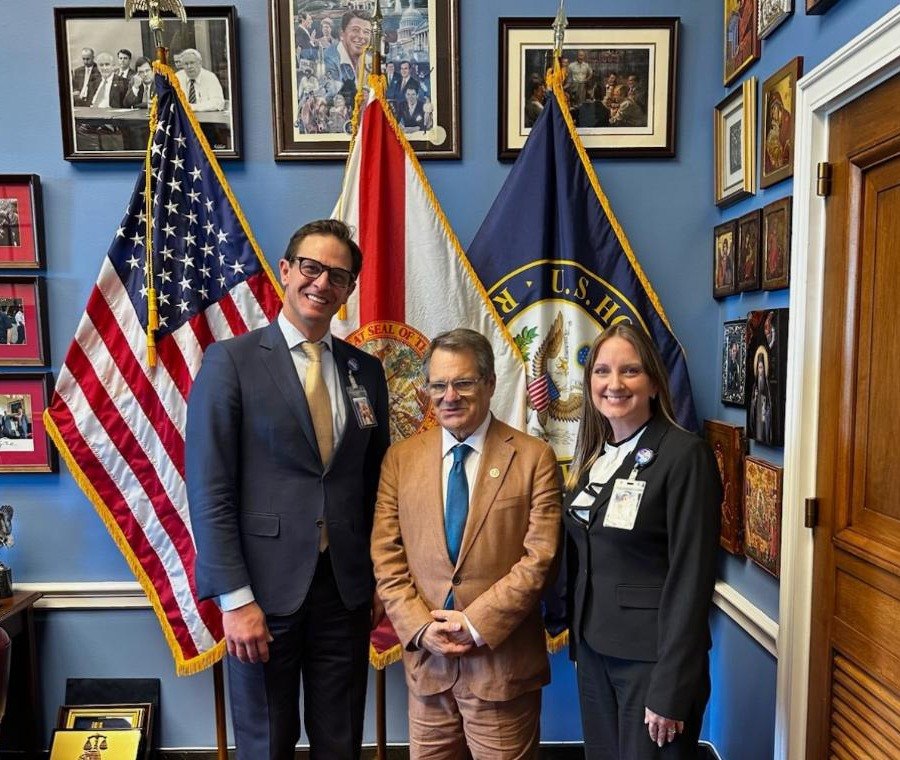
Most recently, the Foundation joined , president of the NBIA Disorders Association, on an advocacy trip, bringing the experiences of BPAN and childhood-dementia families directly to those who shape national priorities.
“I recently had the opportunity to meet with and a representative of the Isa Elaine Foundation to discuss their important work advancing research into BPAN... I am grateful for their advocacy, courage, and commitment to raising awareness and accelerating research. Stories like Isa’s remind us of the importance of investing in medical innovation and supporting families facing rare diseases.”
We keep our team small and partner with organizations already doing strong work in childhood dementia, NBIA, and neurodegeneration, helping them move faster. Our coalition partners include Stanford Medicine, the Lucile Packard Foundation for Children’s Health, UF Health’s Norman Fixel Institute, the NBIA Disorders Association, the Childhood Dementia Initiative, and Tyler’s Hope for a Dystonia Cure.
Home of the flagship BPAN initiative led by Dr. Juliet Knowles, uniting pediatric and adult neurology, imaging, genetics, and epilepsy.
Channels philanthropic gifts to Stanford children’s health research, including the Isa Elaine Foundation Research Fund.
Home of the Isa Elaine Foundation Brain Iron Disorders Care Program at the Norman Fixel Institute, bringing BPAN research and specialized care closer to home.
Our first U.S. family-support partner, nearly 30 years of education, community, and advocacy for NBIA families, including BPAN.
Our global data and advocacy partner, whose research underpins the statistics that make this crisis visible.