Focus area I
Longitudinal patient study
Characterize how BPAN changes over time: brain structural integrity, inflammation, iron accumulation (MRI), genetic mutations, and shifts in proteins and lipids, alongside standard clinical assessments.
Home / The Science
Our flagship investment is a comprehensive initiative at the Stanford School of Medicine, designed to change the future for children with BPAN, and to illuminate the biology behind adult dementias.
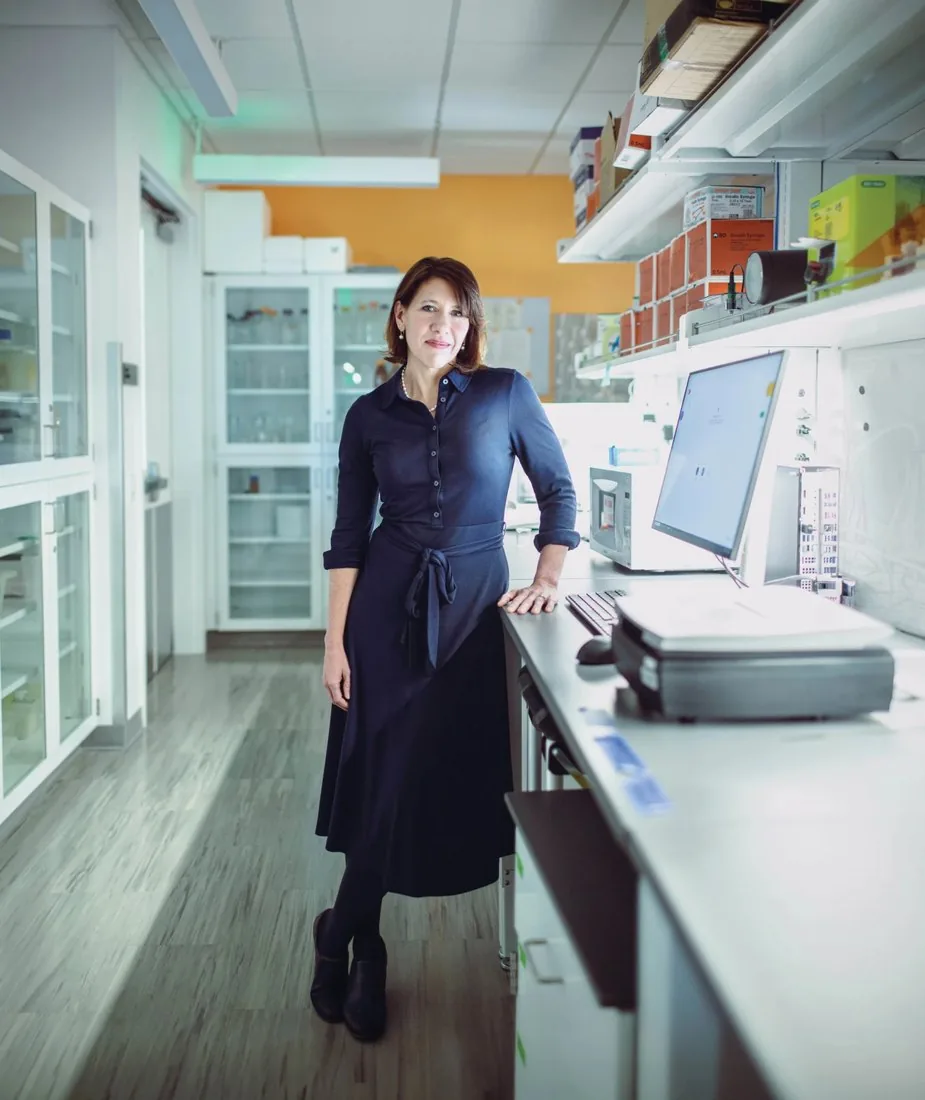
The program is led by pediatric neurologist and neuroscientist Dr. and a cross-disciplinary team spanning pediatric and adult neurology, imaging, genetics, and epilepsy.
It’s a first-of-its-kind effort to uncover BPAN’s disease signatures and to screen thousands of drugs, including many already approved for other conditions, for the ability to correct the deficits at the heart of the disease.
We study BPAN patients like Isa, and her non-BPAN siblings as controls, in a way designed for rapid discoveries that lead to successful treatments.
Characterize how BPAN changes over time: brain structural integrity, inflammation, iron accumulation (MRI), genetic mutations, and shifts in proteins and lipids, alongside standard clinical assessments.
Determine the mechanism of BPAN-related neuronal cell injury and death, providing concrete targets for clinical therapy development.
Identify which treatments are most likely to succeed now: gene- and protein-replacement, stem cell, small-molecule, antioxidant, and anti-inflammatory therapies delivered to the brain.
Bring leading experts together by topic area to set priority research areas and promote the rapid discovery of targets for intervention.
Find measurable signatures of BPAN, to identify who is at highest risk and to track whether a treatment is working.
High-throughput screening of thousands of compounds, including FDA-approved drugs, to find candidates that correct the disease’s autophagy defects.
Model BPAN in human brain tissue grown in the lab, a powerful platform to validate targets and test therapies.
Thanks to generous donors, the work is already advancing. Here is where it stands today, with the latest shared by our partners at Stanford Medicine and the Lucile Packard Foundation for Children’s Health.
Assembled a cross-disciplinary Stanford team and launched the first-of-its-kind BPAN research program.
Established a BPAN mouse colony that reproduces the disease, developing progressive epilepsy alongside cognitive and motor impairments, giving the team a living system to test ideas against.
Built a high-throughput screening platform to test large libraries of compounds, including FDA-approved drugs, for the ability to correct the underlying biology of BPAN.
Connecting with more patients and families to deepen the natural history of BPAN and prepare for future clinical trials.
Developing MRI measures and biomarkers from BPAN-derived cells to detect the disease earlier and tell whether a treatment is working.
Milestones summarized from our partners at Stanford Medicine and the Lucile Packard Foundation for Children’s Health. Read the full updates →
Led by pediatric neurologist and neuroscientist Dr. Juliet Knowles, the program unites pediatric and adult neuroscience so BPAN can be studied as a window into neurodegeneration across the lifespan.
Supported by the Stanford Wu Tsai Neurosciences Institute, the Stanford Alzheimer’s Disease Research Center, the Knight Initiative for Brain Resilience, and the pediatric epilepsy center at Lucile Packard Children’s Hospital Stanford.
About $1.7M was raised toward the science before the Foundation’s involvement. Since then, the Foundation has added a $500,000 gift and helped raise more, bringing the total to about $2.46M toward the $4.3M initial goal, which funds the faculty plus Pathways I and II. A $2.4M future goal adds Pathway III, roughly $6.7M for the full program.
Philanthropy sets the pace. Every gift accelerates the timeline to a treatment.
BPAN behaves like a very accelerated form of the neurodegeneration seen in Parkinson’s and Alzheimer’s. All three share a breakdown in autophagy, the brain’s recycling system.
So by studying BPAN early in childhood, researchers may uncover targets that help children today, and adults facing the most common dementias tomorrow. That is the bet that pays off twice.
Prepared with ToxSynergy, the comparison maps the shared and distinct features of severe BPAN, , Parkinson’s, and Alzheimer’s. The full document is embedded and downloadable below the summary table.
| Disorder characteristic | Severe BPAN | Rett Syndrome | Parkinson’s | Alzheimer’s |
|---|---|---|---|---|
| Differences | ||||
| Known initial insult (cause) | Yessingle mutation, X chromosome | Yessingle mutation, X chromosome | No | No |
| Onset age (years) | 1+ | 1+ | 60+ | 60+ |
| Gender bias | Often lethal in males | Often lethal in males | Male (2×) | Female (2×) |
| Seizures | Common | Common | Rare | Uncommon |
| Delayed neurodevelopment | Common | Common | Uncommon | Uncommon |
| Similarities | ||||
| Brain location | Substantia nigra / cerebrum | Substantia nigra / cerebrum | Substantia nigra / cerebrum | Cerebrum |
| Sequence of pathology, the same events in the brain | ||||
| Endoplasmic reticulum (ER) oxidative damage ↑ cell debris, ↓ protein & lipid synthesis | ✓ | ✓ | ✓ | ✓ |
| oxidative damage ↓ energy production, ↑ cell debris | ✓ | ✓ | ✓ | ✓ |
| Autophagy dysfunction ↓ removal of cell debris | ✓ | ✓ | ✓ | ✓ |
| Iron accumulation inside and outside brain cells | ✓ | ✓ | ✓ | ✓ |
| Tangles of protein and lipid inside and outside brain cells | ✓ | ✓ | ✓ | ✓ |
| Neuronal cell injury & death ↓ cognitive ability, language & motor skills | ✓ | ✓ | ✓ | ✓ |
| Oligodendrocyte injury & death ↑ demyelination | ✓ | ✓ | ✓ | ✓ |
| Microglial cells & astrocytes injury & death ↑ brain inflammation | ✓ | ✓ | ✓ | ✓ |
| Neurodegeneration accelerates | ✓ | ✓ | ✓ | ✓ |
| High-dose biotin supplementation | ||||
| Reduces neurodegeneration clinical & experimental models | ✓ | ✓ | ✓ | ✓ |
Though the initial insults differ, the cascade of toxic events that follows, and that ends in neurodegeneration, appears to be nearly identical across all four disorders. High-dose biotin (vitamin B7) supplementation has been reported to reduce neurodegeneration in clinical and experimental models of these disorders.
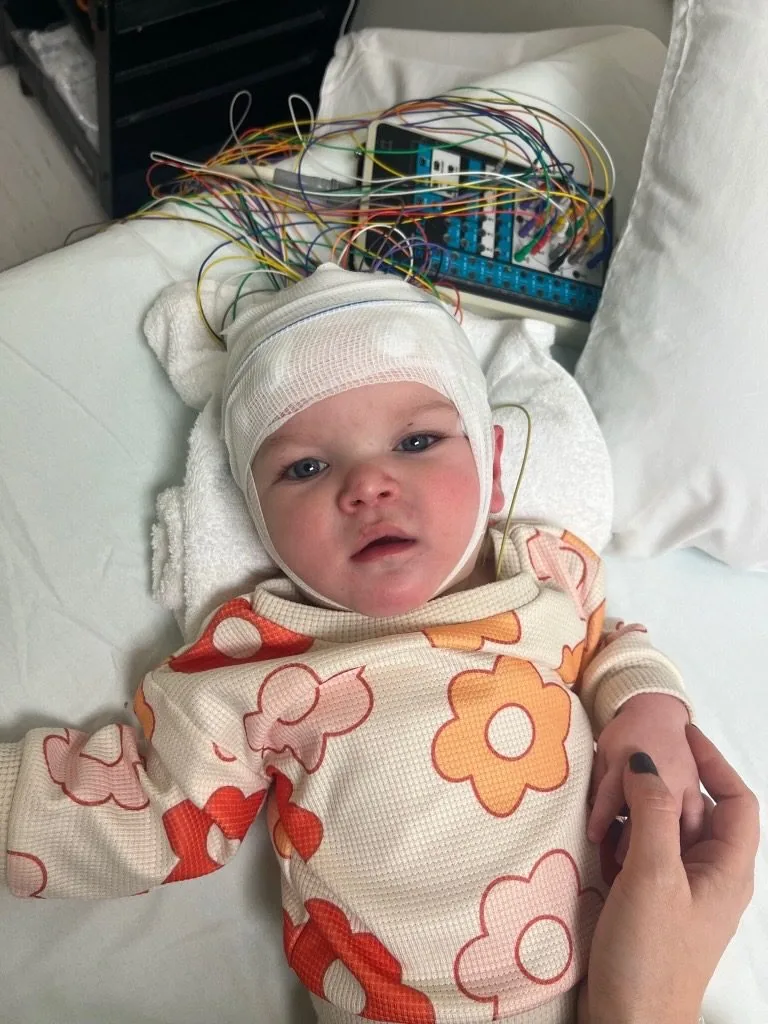
Isa has undergone extensive clinical testing since infancy, across multiple clinical departments, including an advanced infant brain MRI at Wolfson Children’s Hospital, which showed thinning of the corpus callosum and delayed myelination. These early datasets offer rare insight for longitudinal study over time.
Explore the work behind the mission, from our own scientific leaders to the global body of research on BPAN and childhood dementia.
Isa’s great uncle · early scientific guide · author of the cascade comparison (2025)
Board Member · Scientific Advisor
Research lead, Stanford Medicine
Research into BPAN and childhood dementia is happening worldwide. These live searches surface the latest peer-reviewed work, updated continuously.
Each headline figure links to a public report or peer-reviewed study. Where values are estimates, they are labeled as such.