NBIA
Neurodegeneration with brain iron accumulation
Rare genetic disorders marked by abnormal iron build-up in the brain. , Isa’s condition, is one of its subtypes.
Subtype: BPAN
Home / Childhood Dementia
Collectively, childhood dementias take more young lives than childhood cancer. Yet most people have never heard the term. Understanding it is the first step to ending it.
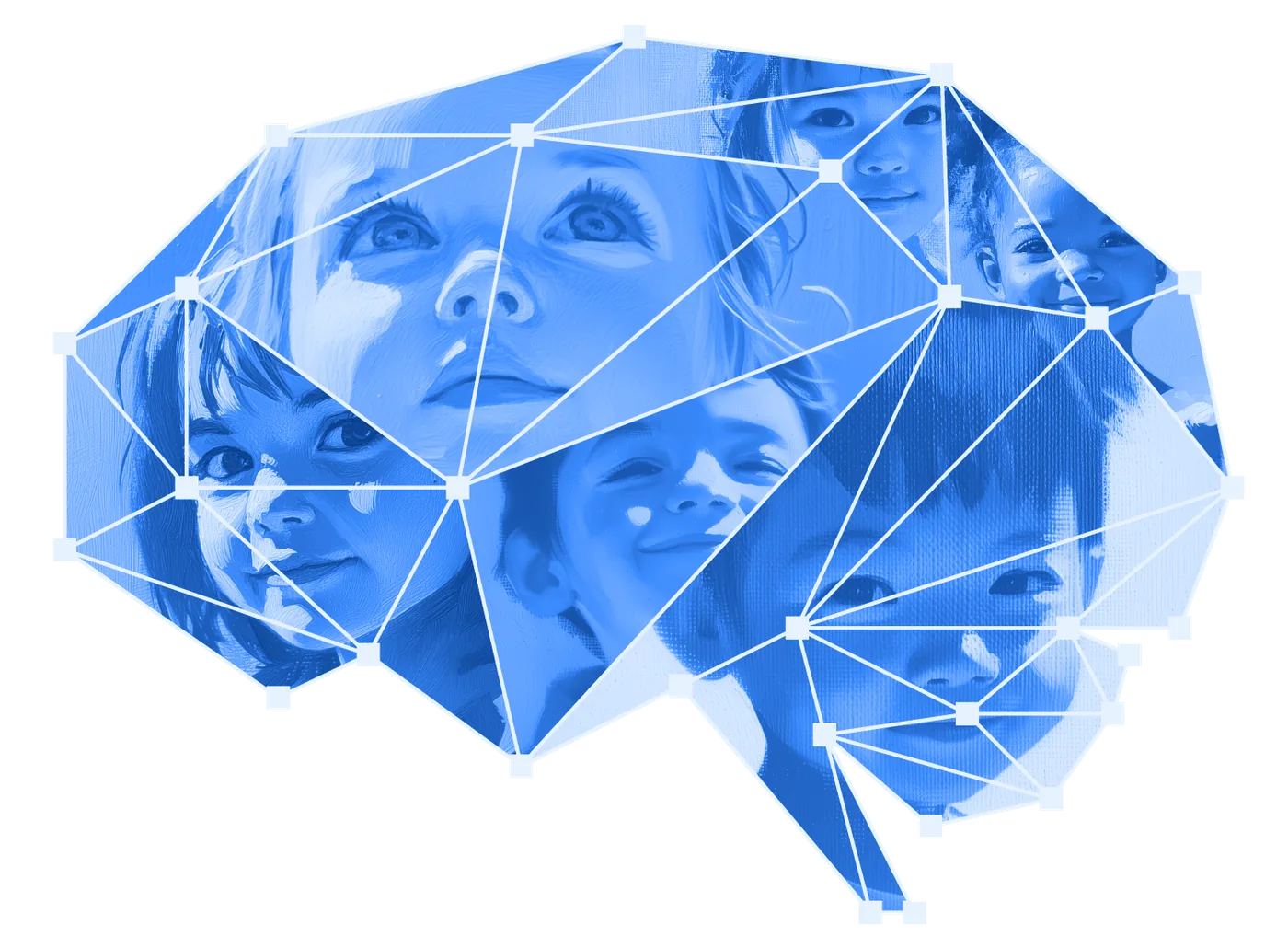
Estimated new diagnoses each year include roughly 1,077 children in the United States, 204 in the United Kingdom, and 91 in Australia. (Source: Childhood Dementia Initiative analysis, Brain, 2023.)
The prevalence of childhood dementia is believed to be similar to that of motor neurone disease, such as ALS. (Source: Childhood Dementia Scotland.)
Childhood dementia isn’t a single disease. It’s an umbrella term for more than 100 rare, progressive disorders that damage the brain in childhood. They fall into four main groups.
Neurodegeneration with brain iron accumulation
Rare genetic disorders marked by abnormal iron build-up in the brain. , Isa’s condition, is one of its subtypes.
Subtype: BPAN
Disorders that damage the brain’s white matter, the wiring that carries signals between brain cells.
Inherited disorders in which the body can’t properly process certain substances, which build up and harm the developing brain.
Other rare genetic conditions that cause childhood dementia but fall outside the three groups above.
Not all leukodystrophy and inborn-errors-of-metabolism disorders cause childhood dementia. See the full list of disorders at the Childhood Dementia Initiative →
Like adults with dementia, children lose cognitive ground, but they also face physical decline that compounds over time. Every child’s path is different.
BPAN, beta-propeller protein-associated neurodegeneration, is the rare childhood dementia Isa lives with. Here it is in plain language.
A genetic condition caused by a change in the WDR45 gene, usually a spontaneous mutation, not inherited. It belongs to a family of disorders called NBIA (neurodegeneration with brain iron accumulation).
It disrupts , the brain’s recycling system. In early childhood it slows development and causes seizures; in adulthood it brings a steep, Parkinson’s-like decline.
Because BPAN’s biology overlaps with adult dementias, many drug targets are already studied, and some candidate compounds are already FDA-approved for other uses, which could shorten the path to treatment.
As an NBIA subtype, BPAN shares the hallmark of iron accumulation in the basal ganglia, but it follows a distinct two-phase progression.
In early childhood, BPAN brings intellectual disability, limited or absent speech, seizures, and autistic features.
Typically in adolescence or early adulthood, a second phase begins: rapid neurological decline, parkinsonism, and dementia. There is no treatment. There is no cure.
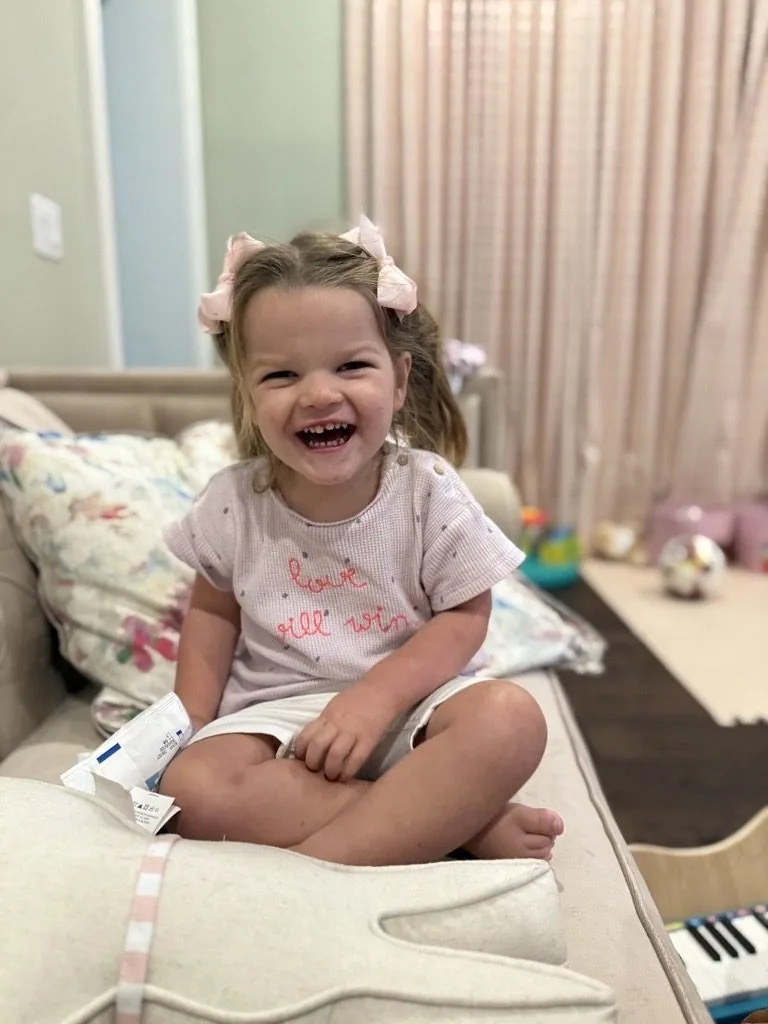
Isa’s case is severe. Her symptoms began before her first birthday, and clinicians involved in her care believe she may be among the youngest patients ever diagnosed with BPAN. Her progression is active and ongoing, and every month matters.
When these genetic mutations are caught in time, clinical teams can intervene, managing symptoms, slowing progression, and in some conditions preventing the most irreversible damage. The window to act is narrow, and for many families it closes before anyone realizes it was open.
But that window is routinely missed. Childhood dementia remains largely invisible within the medical system, without diagnostic infrastructure, specialist capacity, or mainstream awareness, so families are left navigating a landscape that was never built for them. Many spend years searching for a diagnosis. Some never receive one at all.
The system does not fail these families through negligence. It fails them through absence. There was no infrastructure to find Isa, so we are building one.
The same failures that drive BPAN, in autophagy and brain metabolism, are implicated in common adult dementias like Parkinson’s and Alzheimer’s.
So research into Isa’s rare disease doesn’t just help a few hundred children. It can illuminate the biology behind diseases that affect millions, which is exactly why we fund it.
No. “Childhood dementia” describes a group of rare, mostly genetic diseases that cause progressive loss of skills, memory, and abilities in children. They share the trajectory of dementia, but the causes differ from adult Alzheimer’s.
BPAN is usually caused by a spontaneous (“de novo”) change in the WDR45 gene, meaning it typically is not inherited from a parent.
There is currently no approved treatment that stops or reverses BPAN, care focuses on managing symptoms. Changing that is the central purpose of the research we fund.
Give to fund research and family support, share Isa’s story to raise awareness, or reach out about partnering. Every action helps make this disease visible, and beatable.